
What is polyurethane resin casting?
Polyurethane resin casting is a two-part process: you combine a liquid Part A (resin) and Part B (hardener or isocyanate) at a fixed ratio, mix them, and pour the reacting liquid into a mold where it cures into a solid part. The result depends almost entirely on getting the ratio and the mix right — off-ratio or poorly mixed material cures sticky, soft, brittle, or full of bubbles.
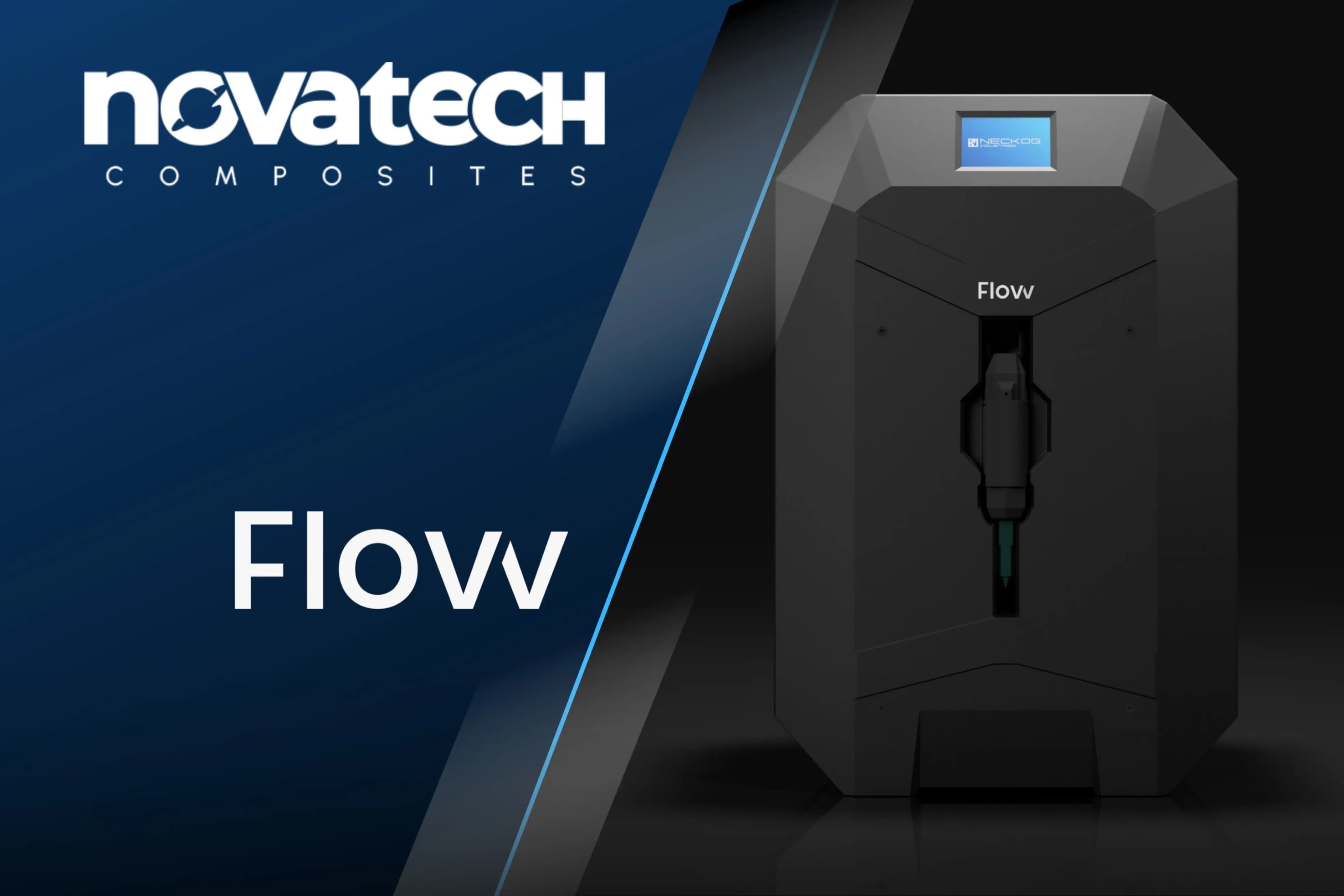
A polyurethane resin casting machine automates the measure-mix-pour steps that are otherwise done by hand with cups and a scale. Flovv meters both parts at a precise ratio and blends them in a static mixing nozzle as it dispenses, so every cast starts from the same consistent mix.
How Flovv casts polyurethane
- Load your two-part material.
- Prepare your mold.
- Set the amount and dispense — Flovv meters A and B and mixes them in-line.
- Let it cure, then repeat with the same repeatable workflow.
What Flovv is: a low-pressure two-part liquid resin and polyurethane casting system, similar to RIM-style (reaction injection) dispensing. What it is not: a thermoplastic injection molding machine — it does not melt or inject plastic pellets, and it is not a 3D printer. It casts reactive two-part liquids into your molds.
Where polyurethane resin casting is used
- Functional prototypes and visual models
- Low-volume batch part production
- Flexible and rigid polyurethane parts
- Molds, jigs and fixtures
- Jewelry, art and architectural models
What you gain with Flovv
- Precise A:B ratio: A fixed, repeatable ratio helps eliminate the sticky or soft parts caused by hand-measuring errors.
- Bubble-reduced mixing: The static mixing nozzle delivers a homogeneous blend with far fewer bubbles than hand stirring.
- Less waste: Fewer rejects and re-pours than manual mixing.
- Shorter learning curve: The workflow is the same every time, so new operators get consistent results faster.
- Compact: Benchtop size, straightforward setup, lower investment than an industrial casting line.
Materials you can cast
Flovv is built for two-part reactive systems: rigid and flexible polyurethane and casting resins, across a wide hardness (shore) range. Browse compatible casting materials and resins, or talk to our team about the right material and hardness for your application. Silicone and epoxy support is expanding — contact us about your specific system before a production run.
Honest limitations
We'd rather you buy the right tool than the wrong one:
- Flovv is built for prototyping and low-to-medium volume casting — it is not high-pressure equipment for mass production.
- It is not thermoplastic injection molding. If you need melted-pellet injection-molded parts, Flovv is not the machine.
- For bubble-critical clear or deep-pour casts, you may still want to degas or vacuum-treat the material — in-line mixing reduces bubbles but does not replace vacuum for every part.
- Always check your material's pot life, mix ratio, and compatibility before a production run.
Flovv vs. hand mixing
Hand casting means weigh, mix, degas, pour, clean, and repeat — slow, messy, and inconsistent cup to cup. Flovv automates the measure-mix-pour steps so results stay consistent from the first cast to the last, with less waste and far less rework.
Ready to start? See the Flovv resin casting machine, explore related uses like foam casting, prototyping, and low-volume manufacturing, or browse all products.