
Why prototype with cast parts?
Prototyping and product development live on fast, cheap iteration — but a prototype is only useful if it behaves like the real thing. Cast polyurethane and resin parts give you real material properties (actual hardness, flex, and impact behavior) rather than the appearance-only output of some quick methods, while keeping per-part cost low because the mold does the work.
- Functional parts with real, testable material properties
- Economical low-volume iteration (one mold, many casts)
- Try variants across flexible and rigid shore hardness
- Fast iteration: multiple copies in a day
Real material properties for honest testing
The point of a functional prototype is to learn something true about the design — does the snap-fit hold, does the grip feel right, does the part survive a drop? Casting in production-like polyurethane or resin lets you test those properties directly, and casting different shore hardnesses from the same master lets you dial in feel before committing to tooling.
The silicone-mold-plus-cast workflow
- Start from a master pattern (machined, hand-made, or printed).
- Take a two-part silicone mold from the master.
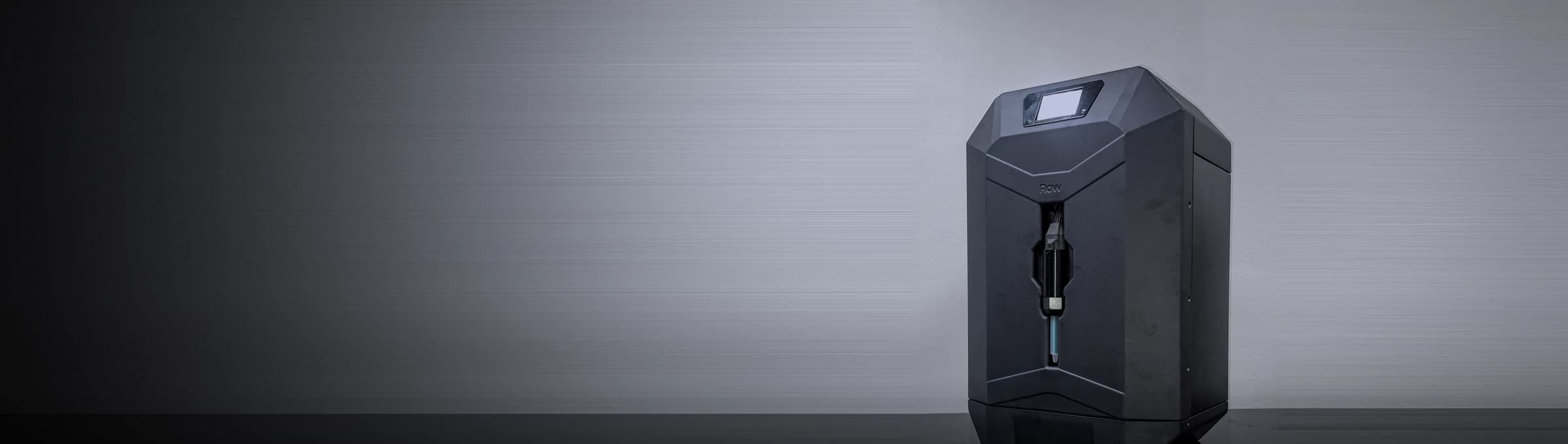
- Cast polyurethane or resin with Flovv, which meters A and B at a fixed ratio and mixes in-line.
- Pour before the pot life ends, cure, and demold.
- Repeat for consistent copies, or swap material to test a variant.
This mold-plus-cast loop is how you get many consistent parts from one master without hard tooling. (See silicone mold making for the mold side — note silicone is an expanding capability, so contact us about your system first.)
Fast iteration without hard tooling
Because the mold is cheap and quick to make, you can iterate the design, re-mold, and re-cast in days rather than the weeks an injection-mold tool would take. Flovv keeps the casting step consistent so the variable you're testing is the design, not the mix. It's a low-pressure two-part liquid system — not a 3D printer and not thermoplastic injection molding.
Who it's for
- R&D labs and product-development teams validating functional designs.
- Design studios iterating on form, feel, and fit.
- Universities for teaching and research builds.
- Small manufacturers bridging from prototype to first production parts.
Where hand mixing is still fine
For a single proof-of-concept cast, hand-mixing is perfectly adequate — the design question matters more than mix consistency at n=1. Flovv pays off once you're casting variants and copies often enough that consistent material removes a variable from your testing.
Honest limitations
- Cast prototypes reflect cast material behavior — not every property of an injection-molded production part.
- Bubble-critical clear prototypes may still need degassing or vacuum.
- Silicone for the mold side is an expanding capability — confirm your system with us first.
- Check viscosity, pot life, and mix ratio for your material before a longer iteration run.
Start iterating with the Flovv injection system. Explore the mold side via silicone casting, material choice via resin casting and polyurethane casting, and scaling via low-volume manufacturing. Browse mold release and chemicals for clean demolding. For corporate or university purchasing, request tailored pricing via the 'Get a Quote' form.