
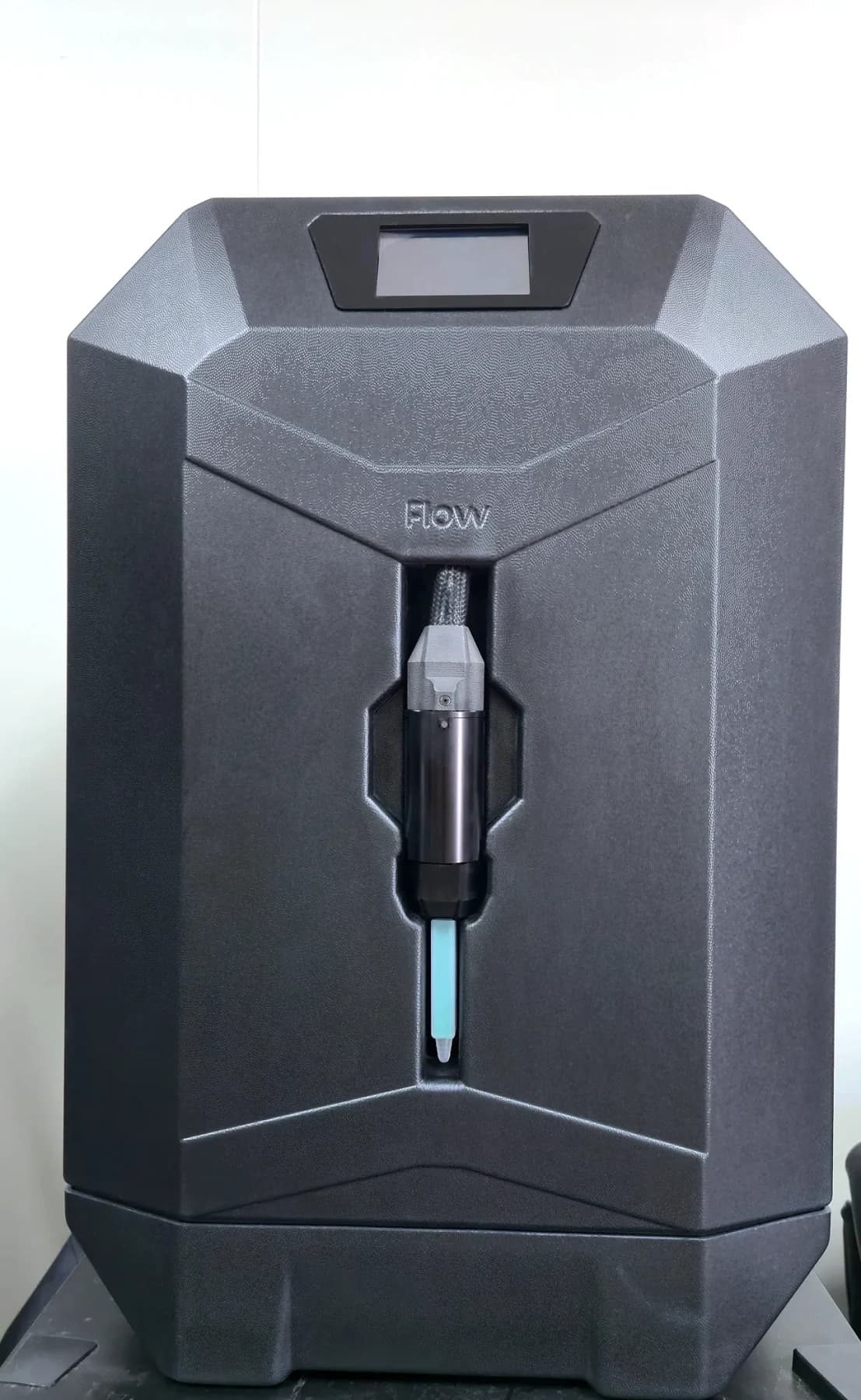
What is low-volume manufacturing?
Low-volume manufacturing means producing small runs — often tens to a few hundred parts — rather than mass volumes. Cast polyurethane and resin are common choices because mold costs are low and you can change designs without new steel tooling. The challenge is making every part in the batch match, which is as much an equipment question as a process one.
- Short production runs of functional PU and resin parts
- Bridge production before committing to hard tooling
- Spare parts, fixtures, and end-use components in modest quantities
Is Flovv the right equipment for low-volume manufacturing?
Flovv is benchtop low-volume manufacturing equipment for two-part polyurethane and resin: it automates the measure-mix-pour steps so your output doesn't depend on hand-weighing cups. It's a good fit if you want consistent cast parts without standing up a full casting cell, and a poor fit if you need melted-pellet injection molding or mass volumes. It is a low-pressure two-part liquid system — not a 3D printer and not thermoplastic injection molding.
A simpler alternative to vacuum casting
Traditional low-volume casting often means a vacuum-casting setup: a chamber, pumps, and a fair amount of operator skill. For many low-volume polyurethane and resin parts, Flovv is a simpler, lower-footprint alternative — it brings the precise A:B metering and in-line mixing that drive consistency, without the full vacuum-casting cell. Vacuum still wins for the most bubble-critical clear parts, but for a lot of functional low-volume work, an automated benchtop dispenser covers the job with far less setup.
Who it's for
- Product developers moving from prototype to first real production parts.
- Small manufacturers and workshops running short batches of fixtures, enclosures, or end-use components.
- Studios and labs that need repeatable parts but can't justify hard tooling.
Where manual casting is still fine
If you're making a handful of parts a month, or each run is a different one-off, hand-mixing is reasonable — the equipment investment pays off when you're casting the same parts often enough that consistency and reduced rework outweigh the cost. Flovv is about removing variability at repeatable low volume, not replacing the occasional manual pour.
Honest limitations
- Built for low-to-medium volume — it is not high-pressure mass-production equipment.
- The most bubble-critical clear or deep-pour parts may still need a vacuum step.
- Material fit matters: confirm viscosity, pot life, fillers, and mix ratio for your system before a production run.
See the Flovv injection system for low-volume runs, and compare the framing on small-batch production and prototyping. Curious how it stacks up? See Flovv vs. hand mixing and Flovv vs. thermoplastic injection molding. Browse materials and chemicals too.