
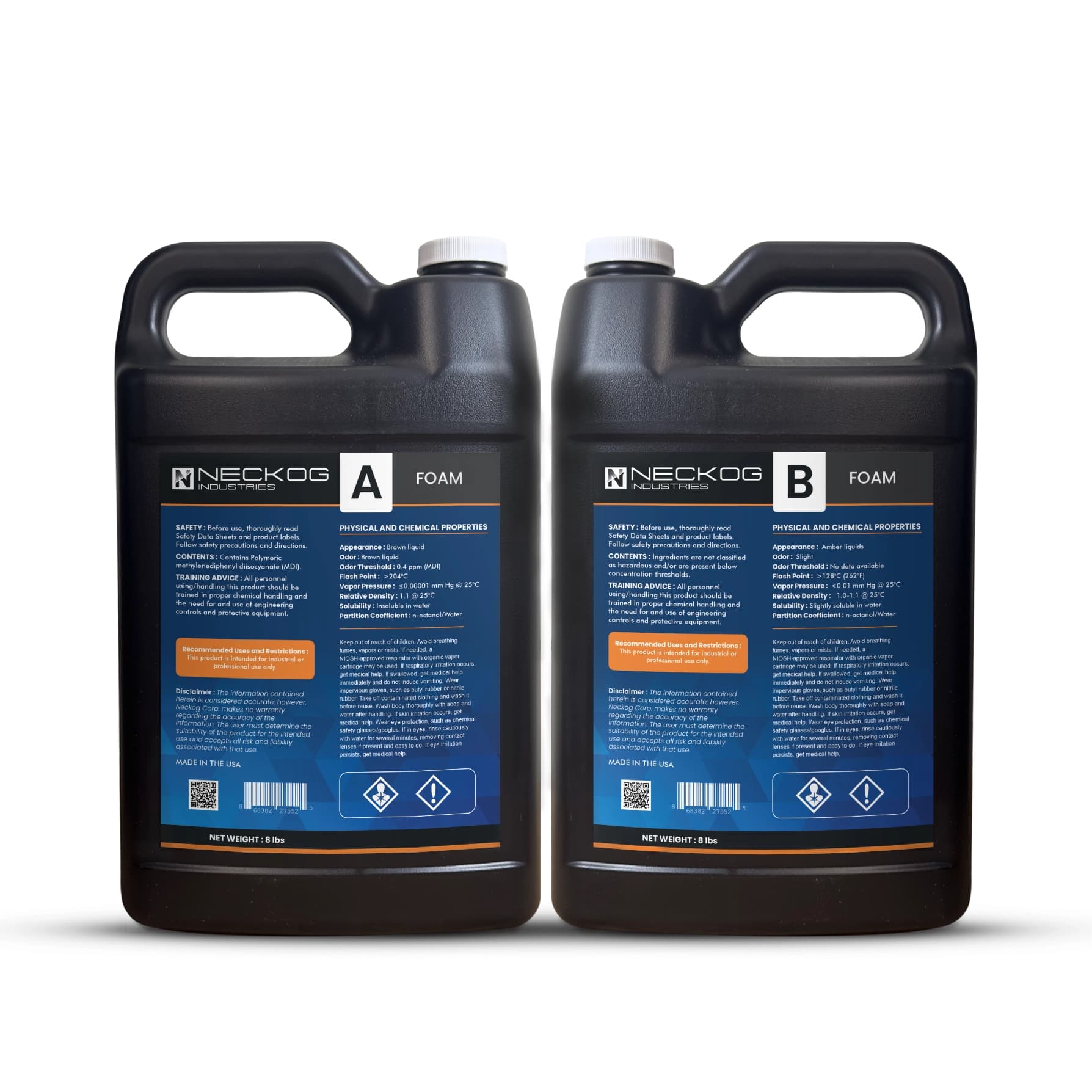
What is foam casting?
Foam casting pours a two-part polyurethane foam system into a mold, where the components react and the mixture rises (expands) as it cures into a rigid or flexible foam part. Because the foam is expanding while it sets, the A:B ratio and the speed of mixing and pouring directly drive the final density and surface.
- Rigid and flexible PU foam parts
- Lightweight cores, fillers, and packaging-style inserts
- Props, models, and low-volume foam components
Density depends on ratio and temperature
Foam density isn't fixed by the material alone — it's the product of how you run it:
- A:B ratio: off-ratio mixes rise too much or too little, shifting density and cell structure.
- Temperature: warmer material and molds react faster and rise more; cold conditions slow the rise and can leave the foam dense or under-expanded.
- Free-rise vs. constrained: foam left to expand freely settles at its natural density, while foam packed into a closed mold is forced denser as it fills — the same system gives different parts depending on how much you constrain it.
Why manual foam casting is hard
- Short rise / pot life: foam systems often have a very short cream and rise time — hand-weighing burns the window you need to pour.
- Density variation: off-ratio batches rise inconsistently from part to part.
- Voids and short fills: uneven mixing leaves un-reacted pockets.
- Overflow: too much shot volume in a constrained mold pushes foam out the parting line; too little leaves it short.
How Flovv helps
Flovv meters both components at a fixed ratio and blends them through a static mixing nozzle, so the foam starts reacting from a consistent, even mix on each pour — important when the rise time is short and there's no time to fix a bad batch. Process notes: prep and release your mold, vent the mold so rising foam can push air out, plan for overflow at the parting line, and set the shot volume to account for expansion and whether the rise is free or constrained. For two-part PU foam specifically, this is the same foam-capable workflow behind Flovv-e.
Where hand mixing is still fine
For a single foam pour or an occasional prototype, careful hand-mixing can work — though the short rise time makes it stressful. If you're casting foam repeatedly, consistent metering matters more here than in slow-curing resins, precisely because you can't re-stir a foam that's already rising.
Honest limitations
- Short pot life: fast-rising systems demand a quick, planned pour — confirm your foam's cream/rise times first.
- Density control still depends on ratio, temperature, and mold constraint — Flovv keeps the mix consistent but doesn't override foam chemistry.
- Mold design: closed molds need venting and overflow paths, or you'll trap air and get short fills.
- Flovv is a low-pressure two-part liquid system — not a 3D printer and not high-pressure industrial foam equipment.
Pick the right system for your run: see the Flovv injection system, the foam-capable Flovv-e, or explore related routes like polyurethane casting, low-pressure RIM casting, and prototyping. Browse mold release and chemicals for clean demolding.