
What is reaction injection molding (RIM)?
Reaction injection molding combines two low-viscosity liquids — a resin and an isocyanate or hardener — that react and cure into a solid part inside a mold. Unlike thermoplastic injection molding, nothing is melted; the part forms from a chemical reaction. Full industrial RIM uses high-pressure impingement mixing to fill large, complex molds at high speed for big production runs.
How Flovv fits: low-pressure, RIM-style
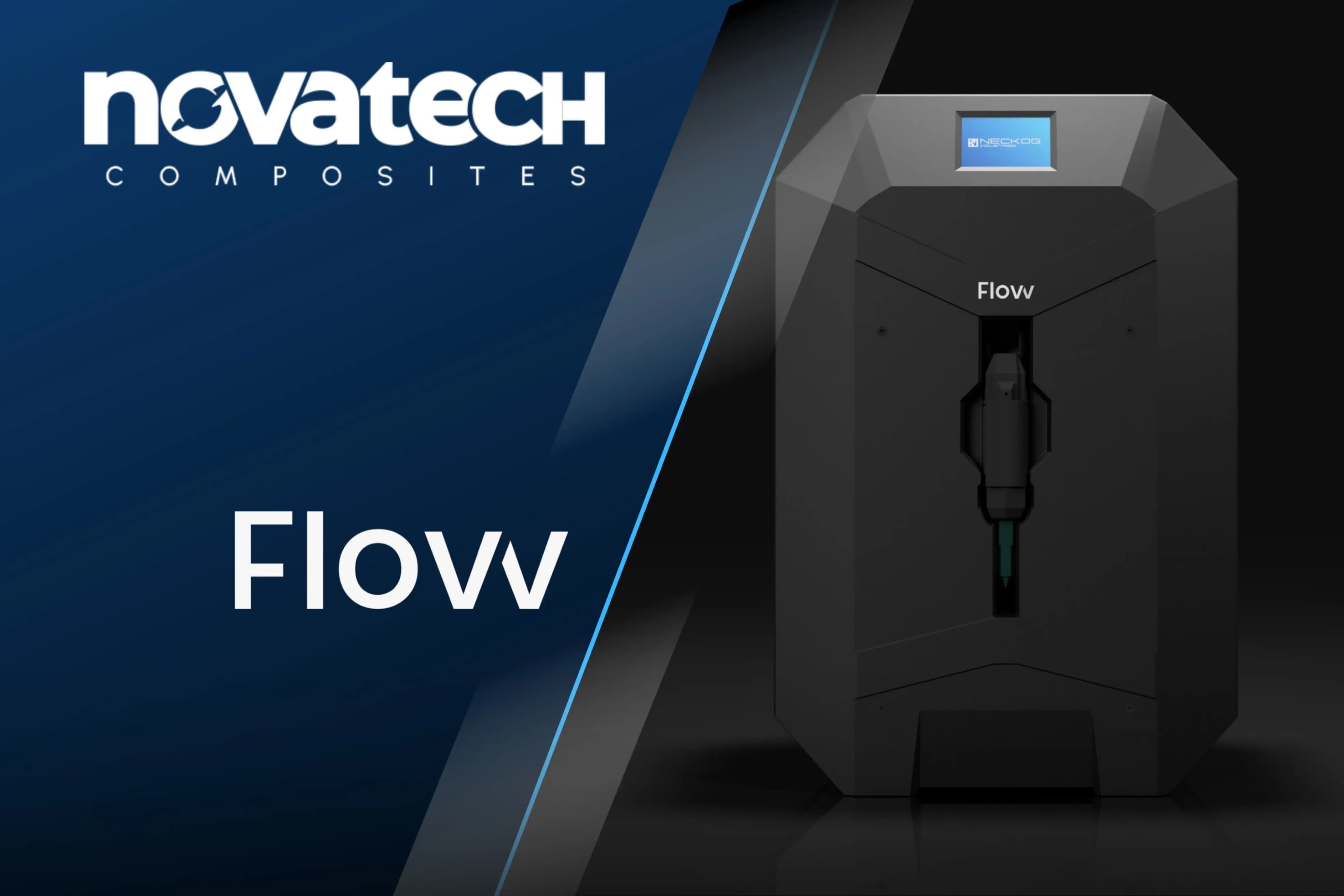
Flovv brings the core of that process — precise A:B metering and in-line mixing of a reactive two-part liquid — to a compact, low-pressure benchtop machine. It meters both parts, blends them in a static mixing nozzle, and dispenses the reacting liquid into your mold. That gives you a reaction-injection-style workflow for low-volume and prototype parts, with far more consistency than hand mixing and far less cost than an industrial RIM line.
What Flovv is not
- Not a high-pressure / automotive RIM production line. It won't force-fill large, intricate molds at industrial speed or volume.
- Not a thermoplastic injection molding machine. It does not melt or inject plastic pellets.
- Not a 3D printer. It casts reactive two-part liquids into molds you provide.
- Not a fit for every system. Some materials need high pressure, vacuum, or heated tooling that a low-pressure benchtop machine doesn't provide.
Best-fit applications
- Low-to-medium volume polyurethane and resin parts
- Functional prototypes and short production runs
- Encapsulation (potting), sealing and bonding
- Parts whose molds fill well under low-pressure pour/dispense
Honest limitations
Whether a low-pressure RIM-style approach works for your part depends on the material and the mold. The factors that matter most:
- Viscosity: thicker systems are harder to dispense and fill cleanly at low pressure.
- Pot life: the mix must reach and fill the mold before it gels.
- Fillers: abrasive or settling fillers can affect metering and nozzle wear.
- Cure profile: some systems need heat or specific ambient conditions.
- Mold geometry: large, thin-wall, or intricate molds may need high-pressure RIM to fill fully.
For bubble-critical clear or deep-pour parts, you may still want to degas or vacuum-treat the material. Talk to us about your specific system before a production run.
Flovv vs. hand mixing vs. industrial RIM
- Hand mixing: cheapest to start, but slow, messy, and inconsistent cup to cup.
- Flovv (low-pressure, RIM-style): automated metering and mixing for repeatable low-volume parts on a benchtop, at a fraction of industrial cost.
- Industrial high-pressure RIM: built for large series and complex fills — fast and capable, but expensive and oversized for prototyping or small batches.
Ready to start? See the Flovv resin casting machine, compare with polyurethane resin casting and foam casting, or browse compatible casting materials.