
What is resin casting?
Resin casting is pouring a liquid two-part resin into a mold, where it cures into a solid part. The term covers a broad casting-resin family rather than a single material — and the resin you choose drives the look, strength, and working time far more than the equipment does. Get the resin right and the rest of the process gets easier.
- Clear and colored decorative and art pieces
- Electronics encapsulation (potting) and protection
- Prototypes and visual models
- Jewelry and accessories
The casting-resin family: clear, rigid, flexible
- Water-clear / clear casting resin: prized for transparency in display pieces, embeds, and lenses. Clarity is unforgiving — even small bubbles or a slightly off mix show, so these are the casts most likely to need degassing or vacuum.
- Rigid casting resin: hard, dimensionally stable parts for functional prototypes, enclosures, and models. Often higher viscosity and a defined pot life you have to work within.
- Flexible / semi-rigid resin: rubber-like parts, gaskets, and grips across a range of shore hardness, where you trade stiffness for impact resistance and feel.
- Filled and pigmented systems: color, mineral fillers, or additives change viscosity and cure, so confirm compatibility before a run.
Casting resin vs. polyurethane: which to pick
Casting "resins" (commonly epoxy- or acrylic-based) and casting polyurethanes overlap but behave differently. As a rough guide:
- Pick a clear/epoxy-style casting resin when transparency, long working time, or a glassy finish matter most — think embeds, art, and display parts.
- Pick polyurethane when you want fast demold, tougher functional parts, or a wide flexible-to-rigid shore range. For the machine-focused, buyer-intent view of that route, see our polyurethane resin casting machine page.
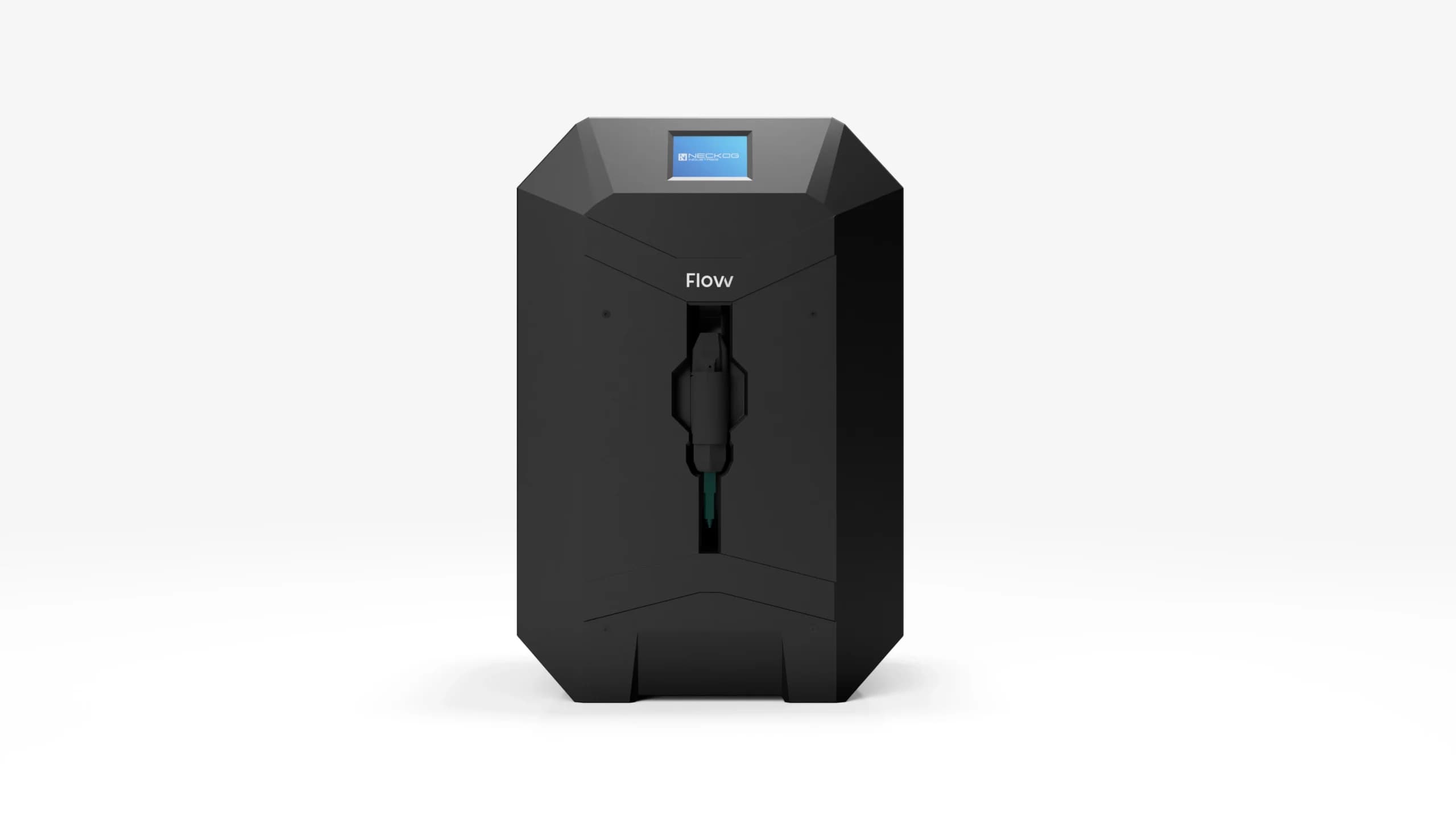
Many shops keep both on the shelf and choose per part. Whichever family you land on, Flovv handles the metering and mixing the same way.
How Flovv helps with any casting resin
Flovv meters Part A and Part B at a fixed, repeatable ratio and blends them in a static mixing nozzle, so each cast starts from the same even mix — with far fewer bubbles than hand stirring. Process notes that apply across the resin family: confirm your resin's mix ratio and viscosity, work within its pot life, account for any fillers or pigments, and match the resin to your mold geometry. Flovv is a low-pressure two-part liquid casting system — not a 3D printer and not thermoplastic injection molding.
Where hand mixing is still fine
For a single small clear pour, a one-off art piece, or an occasional test batch, weighing and stirring by hand is perfectly reasonable — the resin's own pot life and your degassing setup matter more than automation at that scale. Flovv earns its place once you're casting the same resin repeatedly and want every part to match without operator-to-operator drift.
Honest limitations
- Bubble-critical clear casts may still need degassing or a vacuum chamber — in-line mixing reduces bubbles but does not replace vacuum for water-clear or deep pours.
- Viscosity: very thick or heavily filled resins are harder to meter and mix cleanly at low pressure.
- Pot life: short-working-time systems must be dispensed and placed quickly.
- Material fit: unusual or extreme A:B ratios may fall outside the machine's range — silicone and epoxy support is expanding, so check your specific system with us first.
Ready to choose? Compare resins, then set up your run with the Flovv injection system. Explore related routes like polyurethane resin casting, prototyping, and small-batch casting, or browse compatible casting resins and chemicals.