
First, the important distinction
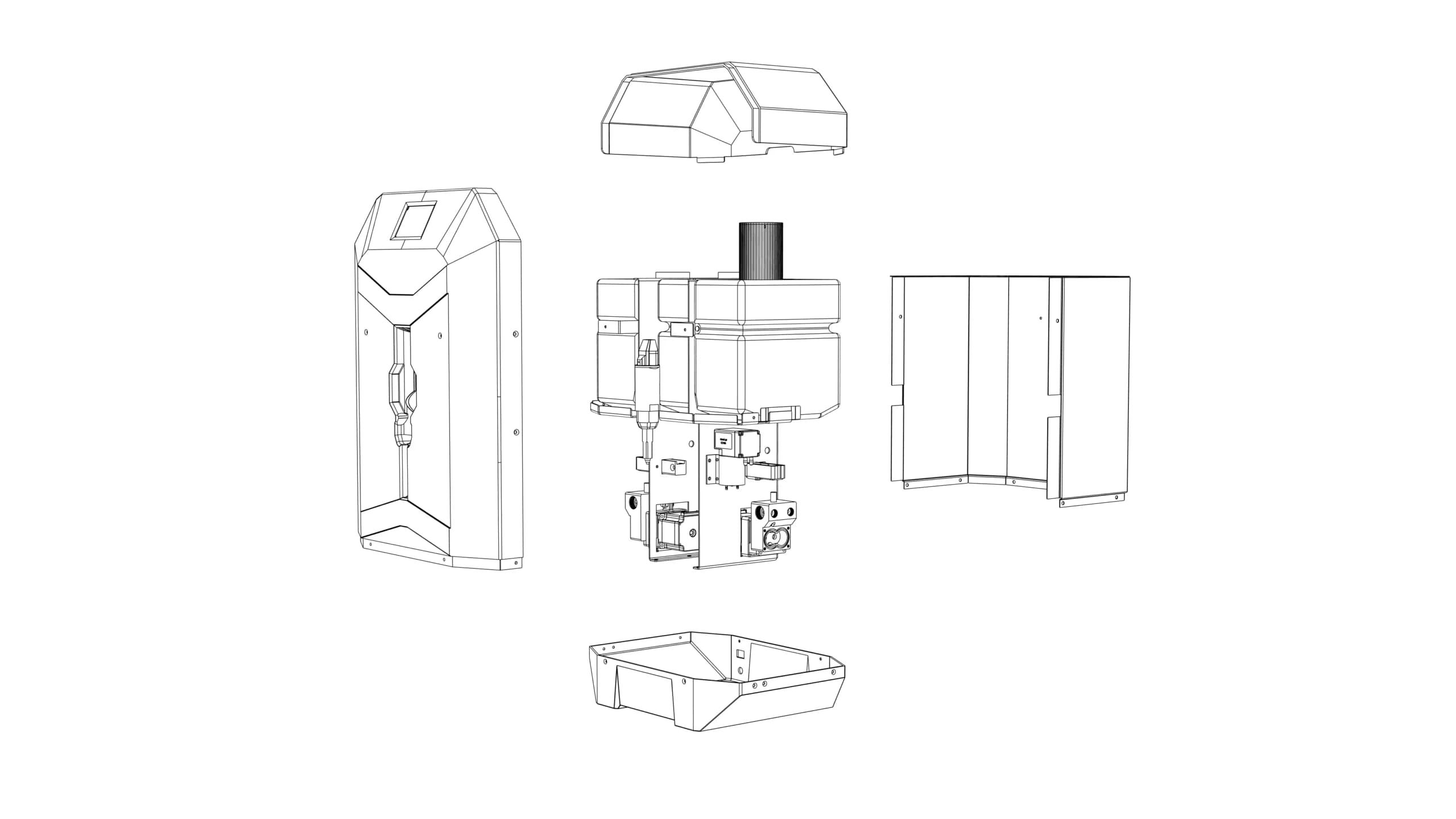
Flovv is not a thermoplastic injection molding machine. It does not melt or inject plastic pellets, and it is not a 3D printer. Flovv is a low-pressure two-part liquid resin and polyurethane casting system, similar to RIM-style (reaction injection) dispensing — it combines a liquid Part A and Part B that react and cure in your mold. If you specifically need melted-thermoplastic parts, Flovv is not the machine, and we'd rather tell you that up front.
How the two processes differ
| Thermoplastic injection molding | Flovv (low-pressure two-part casting) | |
|---|---|---|
| Material | Melted thermoplastic pellets | Two-part liquid resin / polyurethane (thermoset) |
| Pressure | High pressure | Low pressure |
| Tooling | Hard steel/aluminum molds (expensive) | Silicone or other soft tooling (low cost) |
| Tooling cost & lead time | High, long | Low, fast |
| Best volume | Thousands to millions | Prototypes to small/medium batches |
| Part-to-part speed | Very fast at scale | Slower, cure-time bound |
When thermoplastic injection molding is the better choice
We're not here to knock injection molding — it's the right tool for a lot of work:
- High volumes: thousands to millions of identical parts, where the steel tooling cost amortizes.
- Thermoplastic materials: when the part must be a specific molded thermoplastic.
- Tight tolerances at scale with fast cycle times once tooling is built.
When Flovv is the better choice
- Prototyping and product development where you can't justify steel tooling.
- Small-to-medium batches — tens to low thousands, not mass production.
- Soft / silicone tooling with low cost and fast turnaround.
- Two-part liquid materials — polyurethane and casting resins, flexible to rigid.
- Lower up-front investment than an injection molding setup.
Honest limitations
- Flovv won't match injection molding's speed or per-part cost at high volume.
- It casts reactive two-part liquids — not thermoplastics.
- It's low-pressure, so very large, thin-wall, or intricate molds may not fill the way high-pressure processes do.
- Bubble-critical parts may still need degassing or vacuum.
If two-part liquid casting fits your parts, see the Flovv resin casting machine, or read more on polyurethane resin casting, low-pressure RIM casting, and two-part resin dispensing.