
Where hand mixing works fine
Hand mixing is the right call for plenty of work, and we'll say so plainly:
- One-off or occasional casts where setup time matters more than consistency.
- Very small volumes or quick tests where a machine isn't worth it.
- Tight budgets — a scale and mixing cups cost almost nothing to start.
- Experimentation with new materials and ratios before committing to a process.
If that's your situation, hand mixing is genuinely fine. Flovv earns its place when you start repeating casts.
Where Flovv helps
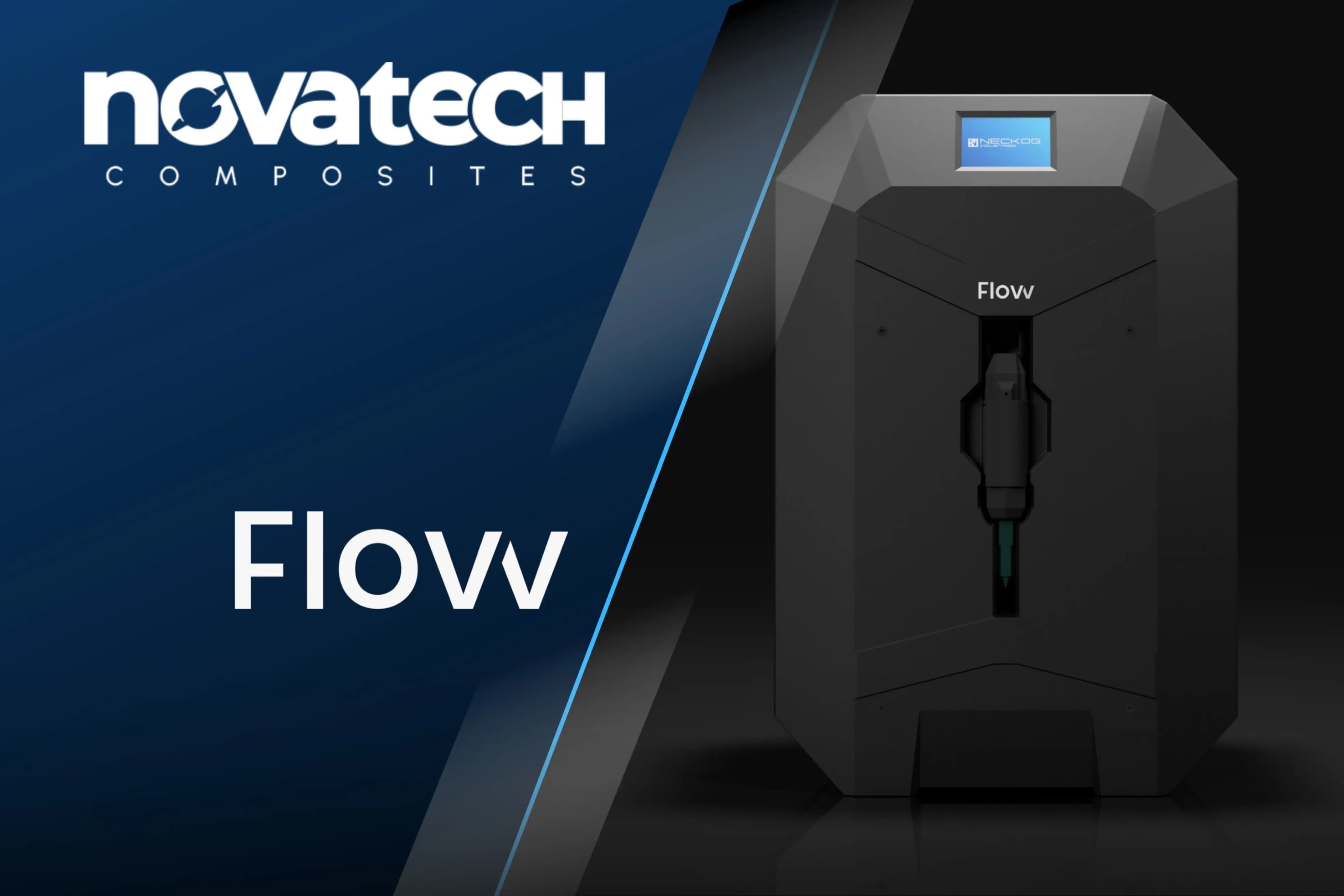
The pain of hand mixing is variability: every cup is weighed and stirred a little differently, so results drift. Flovv meters Part A and Part B at a fixed ratio and blends them in a static mixing nozzle as it dispenses, which targets exactly those problems:
- Repeatability: the same A:B ratio and mix on every cast, not cup to cup.
- Less manual weighing: the machine meters for you, reducing scale errors.
- In-line mixing: a static nozzle blends thoroughly, with far fewer bubbles than hand stirring.
- Less mess and waste: fewer rejects and re-pours, less cleanup.
- Faster repeated casting: a consistent workflow once you're running a batch.
- Shorter learning curve: new operators get consistent results sooner.
Side by side
| Hand mixing | Flovv | |
|---|---|---|
| Up-front cost | Very low | Higher (a machine) |
| Consistency cast to cast | Varies with the operator | Fixed ratio + in-line mixing |
| Bubbles | More — depends on technique | Reduced (not eliminated) |
| Best for | One-offs, tests, very low volume | Repeated casts, small-batch runs |
| Operator skill needed | Higher | Lower once set up |
Honest limitations
- Flovv reduces bubbles versus hand mixing — it does not guarantee a bubble-free cast. Clear or deep-pour parts may still need degassing or vacuum.
- It's a low-pressure two-part liquid casting system, not a thermoplastic injection molding machine and not a 3D printer.
- For a single occasional cast, hand mixing may simply be the better-value choice.
- Material viscosity, pot life, and mix ratio still need to suit the machine — check yours with us first.
Want the machine itself? See the Flovv resin casting machine, or read how it applies to polyurethane resin casting, two-part resin dispensing, and low-pressure RIM casting.