If you cast two-part polyurethane or resin, you've done it by hand at least once: weigh Part A, weigh Part B, stir, degas, pour, wait, demold, clean up. It works. The real question isn't whether hand mixing can produce good parts — it can — but when the time, waste, and inconsistency of doing it by hand start to cost more than a machine that meters and mixes for you.
This guide walks through what manual casting actually involves, where it's still the right choice, and the signals that it's time to automate.
What manual resin casting actually involves
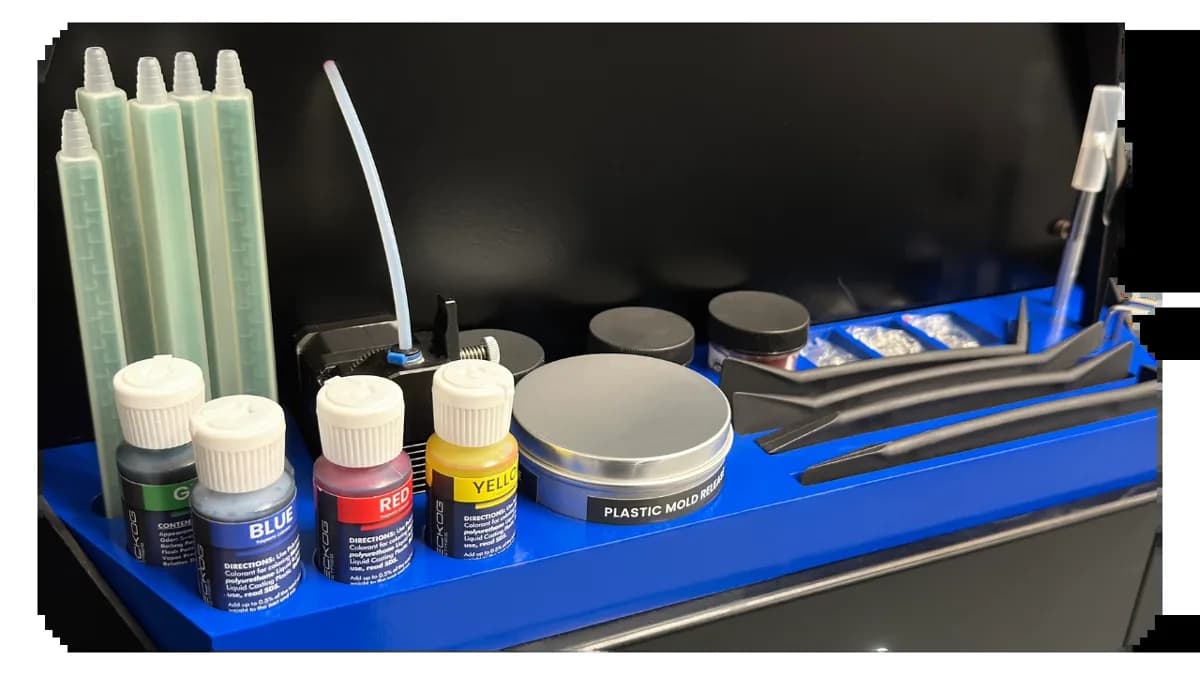
A typical hand-cast cycle looks like this:
- Weigh Part A and Part B to the material's ratio (by weight or volume).
- Mix thoroughly — usually by hand, in a cup.
- Degas or vacuum the mix if the part is bubble-sensitive.
- Pour into the mold before the pot life runs out.
- Wait for cure, demold, and clean cups, sticks, and tools.
Every one of those steps depends on the operator getting it right — and repeating it identically every time.
Where hand mixing is still the right choice
Automation isn't always the answer. Hand mixing is genuinely the better call when:
- You cast occasionally — a few parts here and there, not repeated runs.
- You're experimenting with new materials, ratios, or colors before committing to a process.
- Your budget is tight and a scale plus cups gets you started for almost nothing.
- Your parts are large single pours where setup time matters more than cycle consistency.
If that's you, keep mixing by hand. A machine earns its place when you start repeating casts.
The pain points that compound with volume
The trouble with hand mixing isn't any single cast — it's that small variations add up across many. The usual culprits:
- Ratio errors. Off-ratio mixing is the most common cause of sticky, soft, or under-cured parts.
- Pot life pressure. Once mixed, the clock is running; rushing the pour invites mistakes.
- Trapped air. Hand stirring folds in bubbles, which can mean extra degassing or rejects.
- Operator-to-operator variation. Two people — or the same person on two days — rarely mix identically.
- Mess and waste. Cups, sticks, and leftover material add up in time and cost.
- Repeatability. When every part has to match, "close enough" stops being good enough.
What automation changes
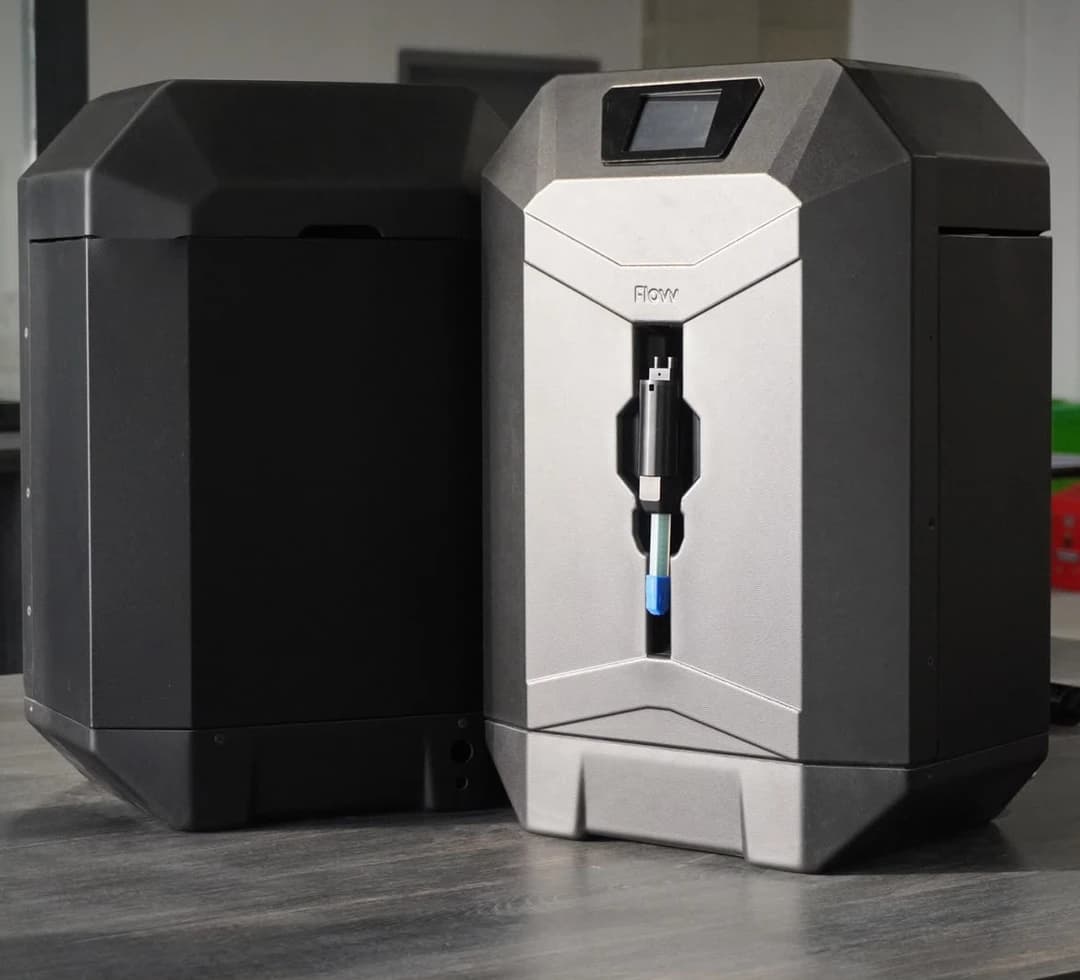
A two-part casting machine takes over the measure-and-mix steps. Flovv is a low-pressure two-part liquid resin and polyurethane casting system: it meters Part A and Part B at a fixed, repeatable ratio and blends them in a static mixing nozzle as it dispenses. That targets the exact problems above:
- More repeatable results — the same ratio and mix on every cast, not cup to cup.
- Less manual weighing — the machine meters, reducing scale errors.
- Helps reduce trapped air versus hand stirring (it doesn't replace vacuum for every bubble-critical part).
- Less mess and rework for routine production casts.
- A shorter learning curve — the workflow is the same every time, so new operators get consistent results sooner.
To be clear about what it is: Flovv is a casting system for reactive two-part liquids — not a thermoplastic injection molding machine, and not a 3D printer.
When not to automate yet
Don't buy a machine to solve a problem you don't have. Hold off if:
- You cast rarely, and consistency between parts isn't a real requirement.
- Your materials have unusual ratios, very high viscosity, or special handling you haven't validated — check compatibility first.
- Your parts are bubble-critical clear or deep pours that will still need vacuum regardless of how they're mixed.
- You're still figuring out which material and hardness you need — experiment by hand first, then automate the winning process.
A quick decision checklist
| If you… | Hand mixing | Automate |
|---|---|---|
| Cast a few parts occasionally | ✓ | |
| Repeat the same cast in batches | ✓ | |
| Need parts to match each other | ✓ | |
| Are testing new materials or ratios | ✓ | |
| Lose time to weighing, mixing, and cleanup | ✓ | |
| Have a tight budget and low volume | ✓ |
Frequently asked questions
Will a machine make my casts bubble-free?
No. In-line mixing helps reduce trapped air compared with hand stirring, but bubble-critical clear or deep-pour parts may still need degassing or vacuum. A machine reduces bubbles; it doesn't remove the need for vacuum on every part.
Is hand mixing ever better than a machine?
Yes — for one-offs, quick tests, and very low volumes, hand mixing with a scale and cups is cheap and perfectly adequate.
What materials can Flovv cast?
Two-part (A:B) reactive polyurethane and casting resins across a wide hardness range. Silicone and epoxy support is expanding — contact us about your specific system before a production run.
Want to go deeper? Compare Flovv vs. hand mixing directly, read about polyurethane resin casting and two-part resin dispensing, or see how casting differs from thermoplastic injection molding. When you're ready, see the Flovv resin casting machine.