
This guide walks through casting two-part polyurethane step by step, with a focus on clean, repeatable parts — and a dedicated section on reducing the bubbles that trip up most first casts.
1. Preparation and safety
Ventilate the area and wear gloves and goggles. Read the material's Technical Data Sheet (TDS) and Safety Data Sheet (SDS) before you start. Bring Part A and Part B to the manufacturer's recommended temperature — cold material changes pot life, viscosity, and how easily air escapes.
2. Prepare the mold
Make sure the mold is clean and dry, apply a release agent if the material needs one, and set the mold on a stable, level surface. A vent or riser at the high points of a complex mold gives trapped air somewhere to go.
3. Set the correct mix ratio
Polyurethane systems cure at a fixed A:B ratio (e.g. 1:1 or 2:1 by weight or volume). An off-ratio mix is the most common cause of sticky, soft, or under-cured parts. Hand mixing relies on careful weighing; a metered static-mix dispensing system delivers the ratio automatically on every shot.
4. Mix thoroughly
Aim for a fully homogeneous blend with no streaks. Hand mixing means scraping the cup and stirring for 30-60 seconds, which unavoidably folds in air. A static-mixing nozzle blends the two parts mechanically as they dispense, introducing far less air than hand stirring.
5. Pour
Pour before the pot life ends, in a thin, continuous stream from the lowest point of the mold. Letting the material rise from the bottom lets air escape upward instead of being trapped under the pour.
6. Cure and demold
Wait the full cure time before demolding — pulling a part early causes deformation. Trim any flash after removal.
How to get fewer bubbles
Bubbles come from two places: air folded in during mixing, and air trapped during the pour. You can reduce both — though for the most demanding clear or deep-pour parts, vacuum is still the reliable answer.
- Mix with less air. Hand stirring folds in bubbles; a static-mixing nozzle blends mechanically and adds far less. If hand mixing, stir steadily rather than whipping.
- Warm the material (within spec). Slightly warmer resin is less viscous, so bubbles rise and escape more easily — but stay inside the manufacturer's range or you'll shorten pot life.
- Pour slow and low. A thin stream from the lowest point fills the mold from the bottom up, pushing air ahead of the material rather than trapping it.
- Vent the mold. Add risers or vents at high points so air has an exit.
- Vibrate or degas. Light vibration brings bubbles to the surface; a vacuum or pressure pot removes them for bubble-critical parts.
- Mind the pot life. As the mix thickens near the end of its pot life, trapped bubbles can't escape — pour with time to spare.
Realistic expectation: these steps reduce bubbles substantially, but they don't guarantee a bubble-free cast. Clear, thick, or detail-critical parts may still need vacuum or pressure regardless of how carefully you mix.
Common problems and fixes
- Bubbles: pouring too fast or from too high, or over-whipping the mix. Fix: slower pour from the low point, static mixing, vent the mold, degas if critical.
- Sticky or soft surface: off-ratio or incompletely mixed. Fix: re-check the A:B ratio and mix more thoroughly.
- Incomplete fill: the pot life ended before the mold filled. Fix: work faster, warm the mold slightly, or choose a longer-pot-life material.
FAQ
Can I get a completely bubble-free cast by hand?
Sometimes, for simple parts. But consistently bubble-free results on clear or deep pours usually need vacuum or pressure. Good mixing and pour technique reduce bubbles; they don't replace vacuum for every part.
Does a casting machine remove bubbles?
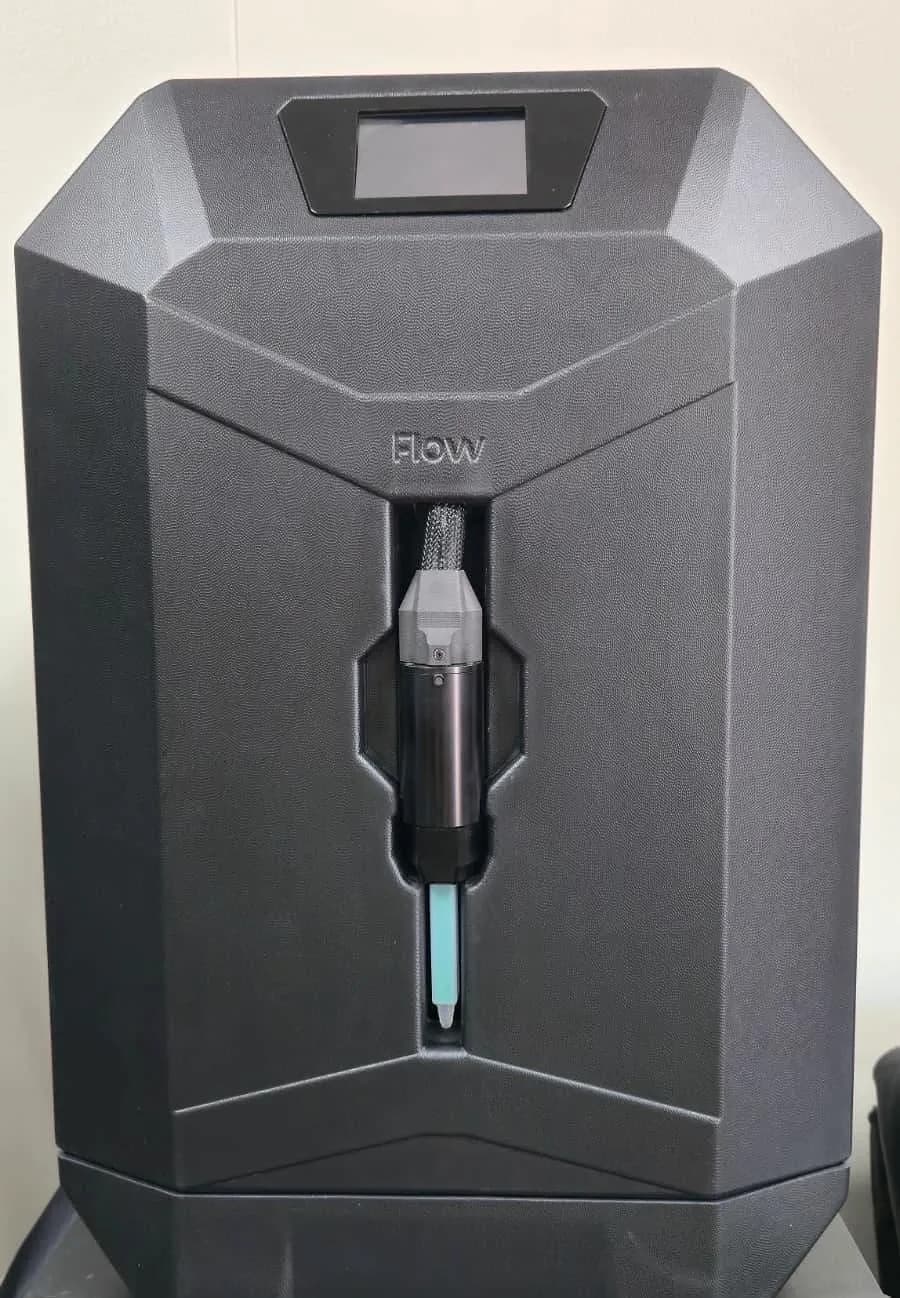
A static-mix dispensing system like Flovv introduces far less air than hand stirring and meters the ratio precisely, so it helps reduce bubbles and off-ratio errors — but bubble-critical parts may still benefit from vacuum.
For more, see polyurethane resin casting, the polyurethane casting guide, or Flovv vs. hand mixing.